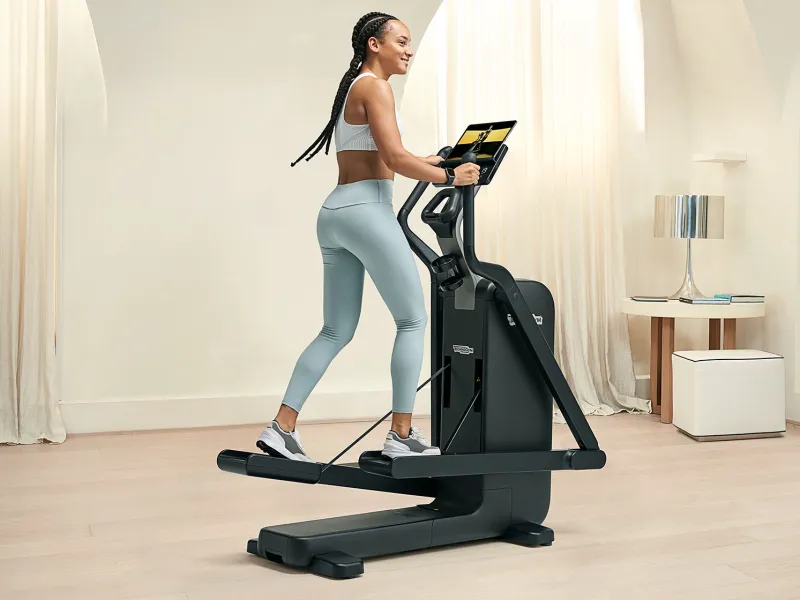
Reading Between the Specs: What Those Orbitrek Numbers Actually Mean When You're Sweating at 6am

Photo by Photo by HANS-Y on Unsplash on Unsplash
You've been browsing orbitreks for a fortnight now. You've got a shortlist, a spreadsheet (or at least a mental one), and a nagging feeling that you don't actually know what a 9kg flywheel does that a 6kg one doesn't. You're not alone — spec sheets are written to impress, not to inform.
So let's do this properly. Here's what each number on that product page actually means when you're standing on the pedals in your dressing gown at six in the morning.
Flywheel Weight: The Difference Between Smooth and Clunky
The flywheel is the big weighted disc that stores momentum as you pedal. Heavier flywheel — generally anything from 8kg upwards — produces a fluid, consistent stride. Lighter ones can feel like you're pedalling through treacle, with a slight stutter at the top of each revolution.
What it means in practice: if you're a casual user doing twenty gentle minutes a few times a week, a lighter flywheel won't ruin your life. If you're planning proper workouts or you're heavier than average, that extra weight is the difference between a machine you enjoy and one that gathers laundry.
Stride Length: Why Tall People Suffer on Cheap Machines
Stride length is the distance your feet travel in one full pedalling motion. Most budget orbitreks sit around 14 inches; proper machines run 18 to 20+ inches.
The 6am reality: if you're over about 5'10", a short stride will have your knees feeling like they're doing an awkward shuffle rather than a natural walk. We've covered this before — a mismatched stride is the fastest route to an orbitrek that becomes a coat rack. If anyone over six foot will use it, don't scrimp here.
Resistance Levels: More Numbers, More... Anything?
Magnetic resistance machines typically advertise 8, 16, or 24 levels. Sounds impressive. Here's the truth: more levels mostly means finer gradations between them, not a bigger range. A machine with 8 well-spread levels is better than one with 16 levels where half feel identical.
What actually matters: does the hardest setting genuinely challenge you? If level 8 of 8 feels like a brisk stroll after a month, you've bought the wrong machine. Read reviews from people who've used it for six months, not the marketing copy.
User Weight Capacity: The Spec Nobody Reads Until It's Too Late
Most orbitreks handle 100–150kg. This isn't just about safety — a machine working near its limit will creak, wobble, and wear out faster.
Rule of thumb: buy 20kg above the heaviest user's actual weight. The machine will run smoother and last longer.
Machine Weight: Annoying Now, Reassuring Later
A 60kg orbitrek is a nightmare to haul up a terrace staircase. It's also rock solid when you're on it. Light machines rock from side to side under load; heavy ones feel planted.
The compromise: 40–50kg with transport wheels is the sweet spot for most British homes. Heavy enough to feel stable, movable enough to relocate when you need the spare room back at Christmas.
Q-Factor and Footprint: The Specs Hidden in the Small Print
Q-factor is the distance between the pedals. Too wide and your hips angle awkwardly outward — a genuine issue for anyone with dodgy knees. Look for a Q-factor under 20cm if joint comfort matters to you.
Footprint is self-explanatory, but measure your actual space including the stride swing, not just the machine's base. Nothing deflates a fitness plan like discovering your new orbitrek won't fit under the ceiling with the loft hatch open.
Which Specs Matter Most — Depends on You
Budget under £300: prioritise stride length and user weight capacity. Everything else is negotiable at this price.
Small flat: footprint and machine weight come first, plus noise (magnetic resistance, always — no air resistance if you've got neighbours below).
Serious training goals: flywheel weight and resistance range. Expect to spend £600+ to get both done properly.
Joint issues or older users: Q-factor, stride length, and a smooth magnetic system. Ignore flashy console features entirely.
The Console: Nice, But Not Decisive
Heart rate grips, app connectivity, twenty pre-set programmes — all pleasant, none essential. A basic screen showing time, distance, and resistance is genuinely all most people use after week three. Don't pay £150 extra for a tablet holder and Bluetooth you'll pair once.
The Bottom Line
Spec sheets are designed to make every machine sound similar, because the differences are buried in numbers most shoppers can't interpret. Now you can. Prioritise stride length and build quality first, resistance second, gadgets last — and you'll end up with a machine that's still being used in March rather than listed on Gumtree by February.