Two Machines, One Living Room: A Fortnight of Treadmill and Orbitrek Sessions, Judged by Someone Who Fixes Knees for a Living
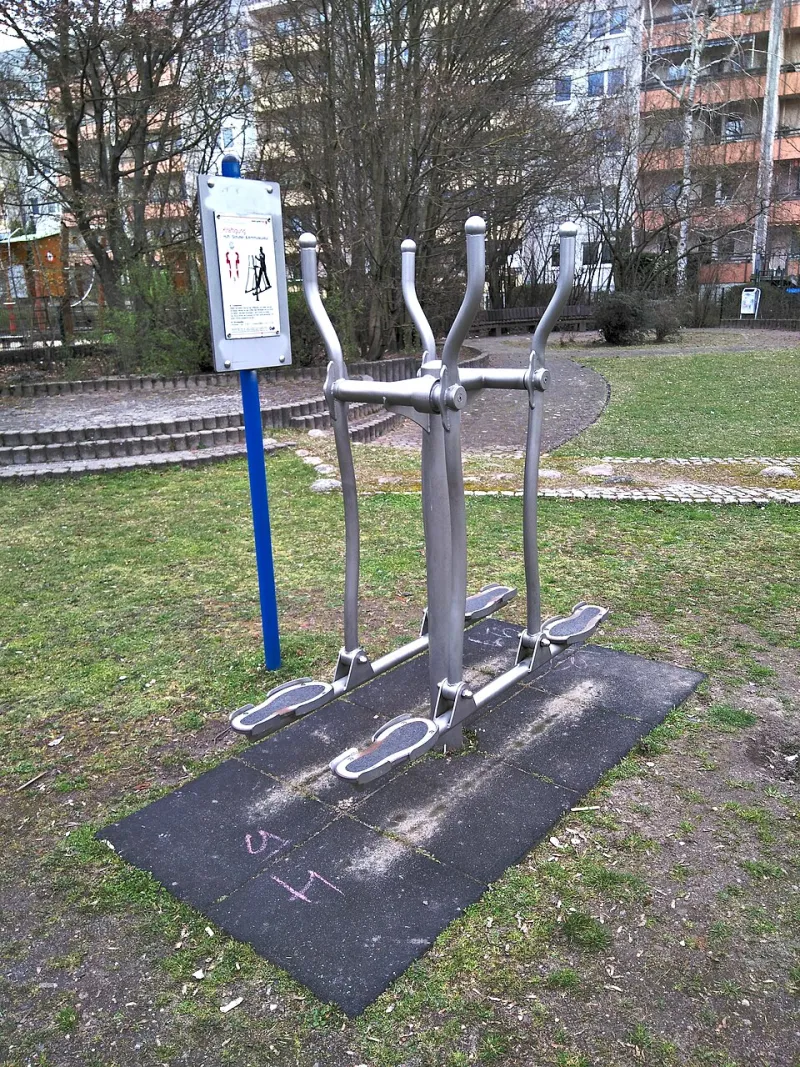
Photo: Singlespeedfahrer, CC0, via Wikimedia Commons
There's a moment in every gym equipment showroom in Britain where the conversation turns subtle. You'll be eyeing up a treadmill, and the assistant will drift over with the easy charm of someone on commission. "Have you considered an orbitrek? Kinder on the knees, that one." Or the reverse: "The treadmill's proper running, mind. The cross-trainer's a bit... gentle."
Both statements contain a grain of truth and a bucket of nonsense. So instead of taking the showroom patter at face value, we did something slightly daft: fourteen consecutive days of alternating sessions — one day treadmill, one day orbitrek — and then sat down with a chartered physiotherapist to make sense of the wreckage. Her name is Dr Helen Marsh (MCSP, HCPC-registered, based in Manchester), and she has spent eighteen years putting dodgy knees and grumbling hips back together. She is not selling you anything.
The Experiment: Two Weeks, Two Machines, Zero Romance
The rules were simple. Every session lasted thirty minutes at a perceived effort of about seven out of ten — working hard enough to hold a conversation in broken sentences, which is roughly the intensity of a brisk walk up Parliament Hill. Same time of day, same trainers, same sad playlist. Heart rate was logged on a chest strap because wrist trackers, bless them, tend to guess.
Day one was the treadmill and, honestly, it felt like the superior workout. Legs heavy, lungs burning, a proper sheen of sweat by minute twenty. The orbitrek the following day felt easier — suspiciously easy — and I nearly wrote the whole thing off as a machine for people who enjoy exercise without actually doing it.
That smugness lasted about four days.
What the Physio Saw That I Couldn't
When I showed Helen the logs, she didn't look at the calorie figures first. She looked at the heart rate data and then asked to watch me use each machine for five minutes. What she said afterwards reframed the entire fortnight.
"On the treadmill, your perceived effort is higher because of impact," she explained. "Every stride sends a shockwave up through the ankle, knee and hip — typically two to three times body weight when running. Your body registers that as effort. On the orbitrek, your feet never leave the pedals, so that shockwave simply doesn't exist. You can push your cardiovascular system just as hard while your joints quietly get on with their day."
In other words: the orbitrek felt easier because it was being easier on the bits of you that complain. Not because it was doing less. My heart rate told the truth — on the orbitrek sessions, average HR sat within a few beats of the treadmill days, despite my legs insisting I was barely trying.
The Knee Question, Answered Without a Sales Pitch
If you've got healthy joints and you love running, the treadmill is a brilliant tool. Helen was emphatic about that. But her patient list tells a different story about British bodies.
"I see people every week who've bought a treadmill in January, run on it through February, and come to see me in March with patellofemoral pain — that grumbling ache at the front of the knee," she said. "It's rarely the machine's fault. It's repetitive impact on a joint that wasn't prepared for it, often combined with old trainers and hard pavement habits carried indoors."
Her professional take: for anyone over about forty, anyone returning from injury, anyone carrying extra weight, or anyone whose knees have already served time on British pavements, the orbitrek is the machine you'll still be using in November. The treadmill is the machine you'll be using as an expensive clothes rail by spring.
Calories: The Boring Truth
The treadmill burned marginally more calories across my fortnight — roughly six to eight per cent more per session at similar heart rates. That gap, Helen noted, is mostly about the arm engagement on the orbitrek being offset by the machine supporting some of your body weight.
"Six to eight per cent is noise in the real world," she shrugged. "A biscuit's worth. People choose the treadmill for calorie burn when they should be choosing based on which machine they'll still be using in six months. Consistency beats intensity every single time."
Muscles: Different Machines, Different Aches
Here's something the fortnight made obvious. The treadmill left my calves and hip flexors talking to me. The orbitrek, particularly on resistance-heavy days, lit up the quads and glutes in a way running never does — and the moving handles meant my arms and back were quietly working too.
"The orbitrek's fixed stride path and pedal motion recruit the quads and glutes more aggressively than flat running," Helen confirmed. "It's why it's a staple in rehab clinics. You're strengthening the very muscles that stabilise the knee, while barely loading the knee itself. That's a genuinely useful trick."
So Which One Deserves the Corner of Your Living Room?
Helen's verdict, delivered with the weary authority of someone who's heard every showroom pitch going:
- Buy the treadmill if you're a committed runner, training for events, or young with robust joints and you genuinely enjoy the feel of it.
- Buy the orbitrek if you want sustainable, low-impact cardio you can do four or five times a week for years — especially in a British house where the machine will sit on boards over carpet, next to a radiator, being used in all weathers.
- Buy neither if you won't use it. But if you're choosing between the two and your joints have ever so much as muttered a complaint, the orbitrek wins on longevity of use. And a machine used daily beats a better machine used twice.
As for me? The treadmill's gone back. The orbitrek is staying. My knees, for the first time in years, have nothing to say about it.